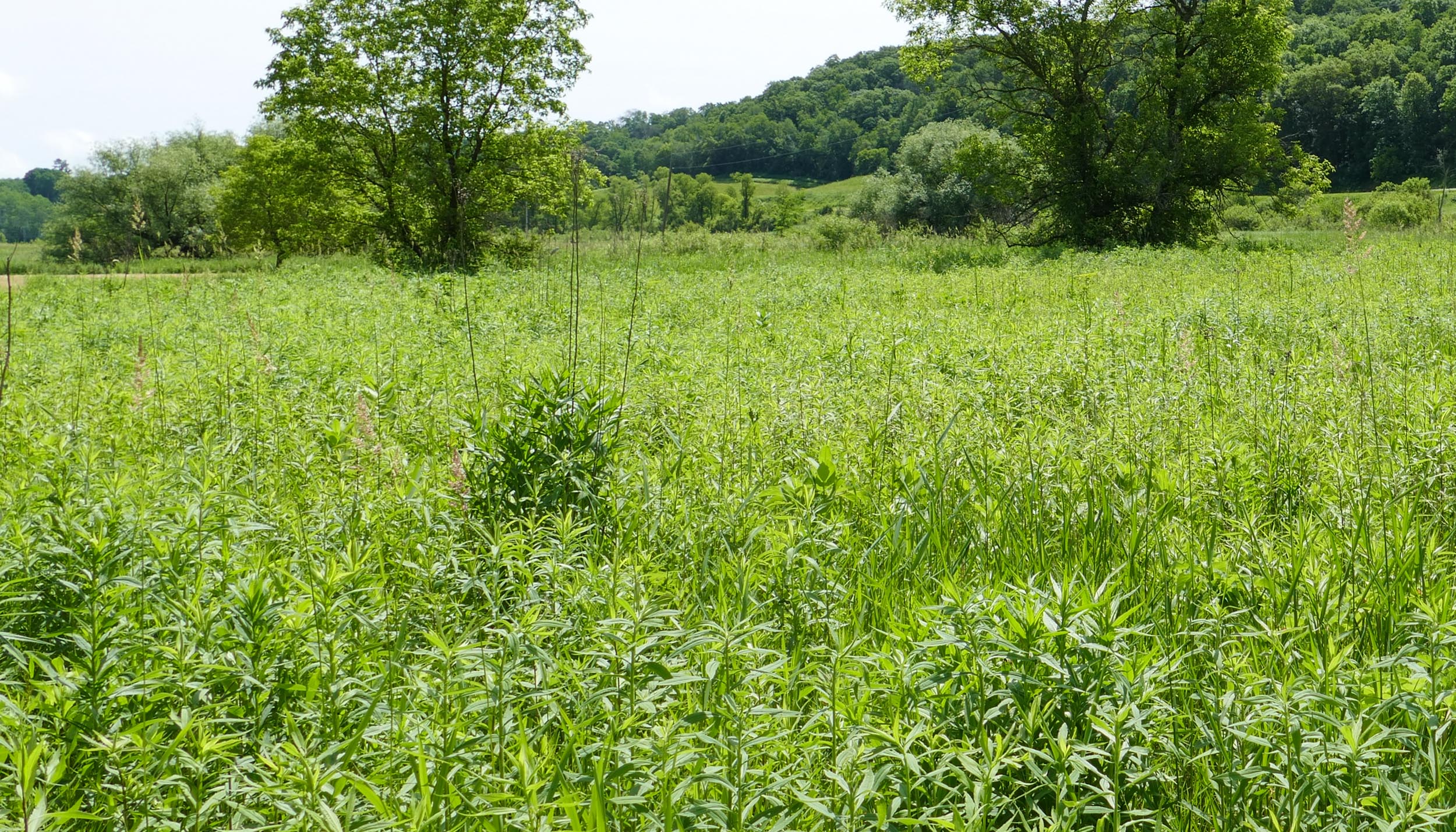
Wild Parsnip is in the Umbelliferae – the carrot family – and like carrots, the roots are edible. Wild Parsnips are native to Eurasia, and were introduced to the U.S. in the 1800s. They are on many states’ noxious weed lists.
One of the reasons Wild Parsnips are such a problem is that they are prolific – producing many seeds, and advancing quickly into areas of native plants. Another reason is that their sap causes painful blisters on people’s skin when exposed to sunlight. I have to be very careful when I’m cutting it – I wear gloves, long pants, long sleeves, and cover as much exposed skin as possible.
Here’s my parsnip pulling outfit.
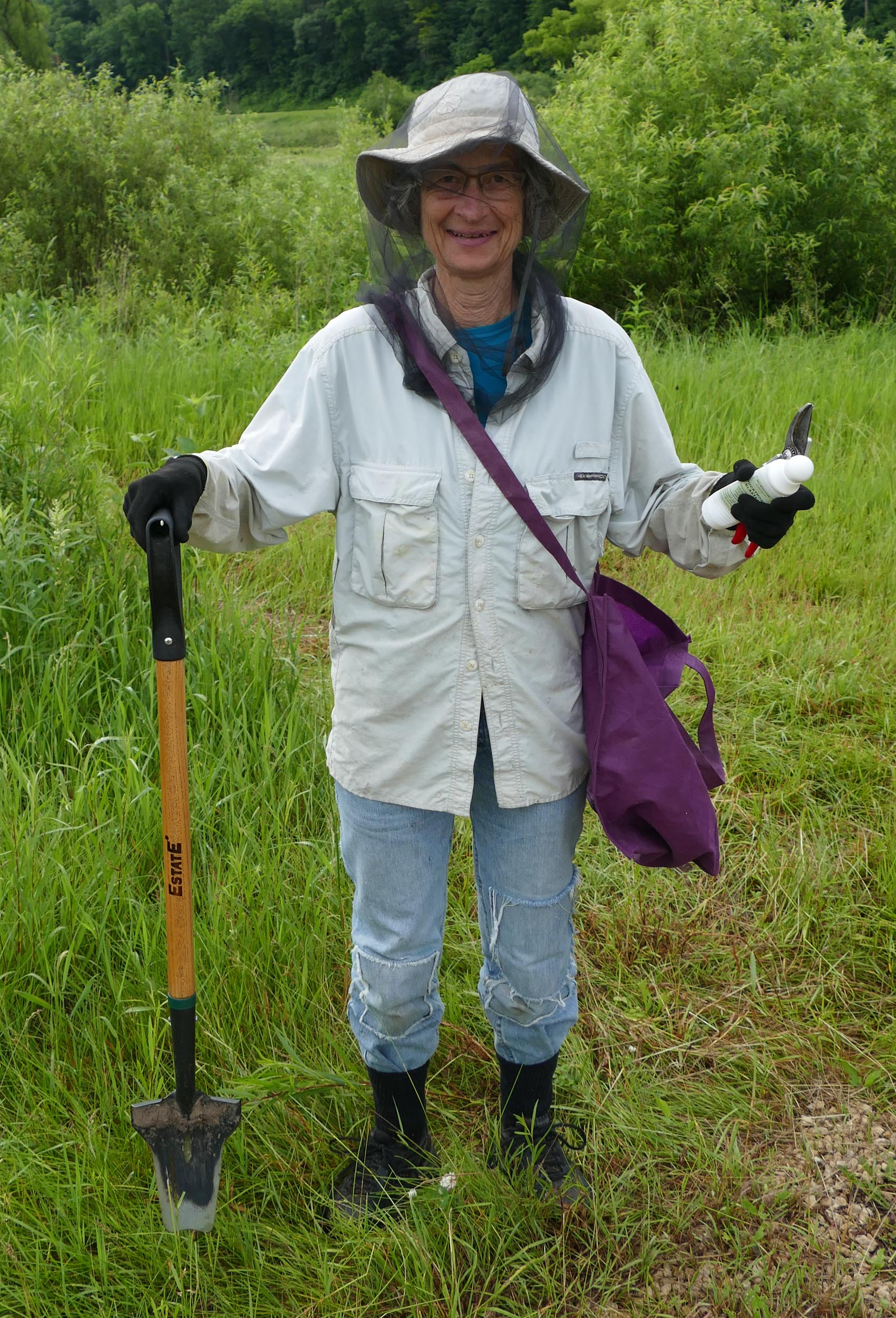
The netting is to keep the gnats away, and also to protect my face from stray pieces of parsnip. The shovel is a Parsnip Predator (see explanation below), and the purple bag is to hold flowers and seeds that I need to carry away so they don’t make new plants.
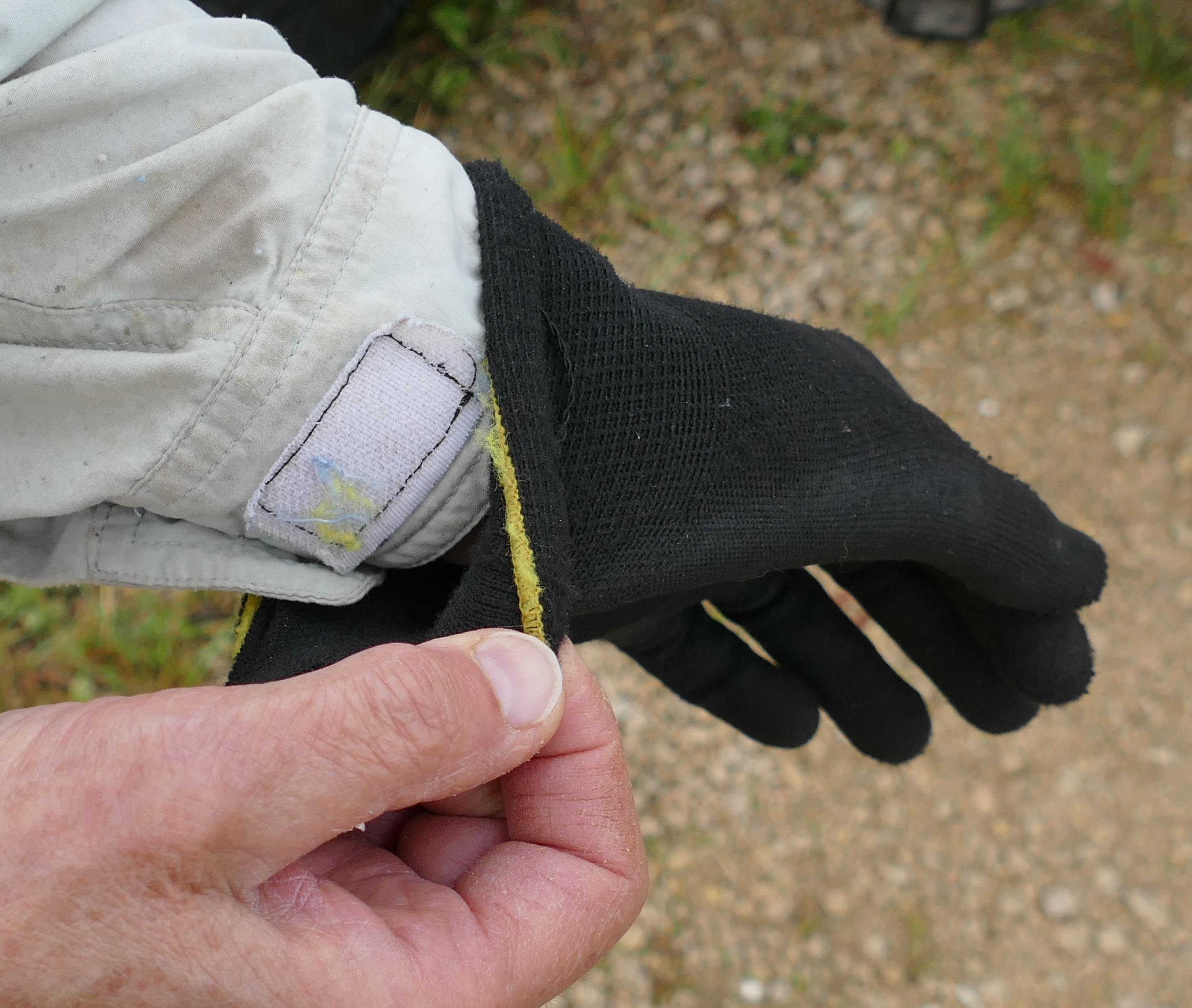
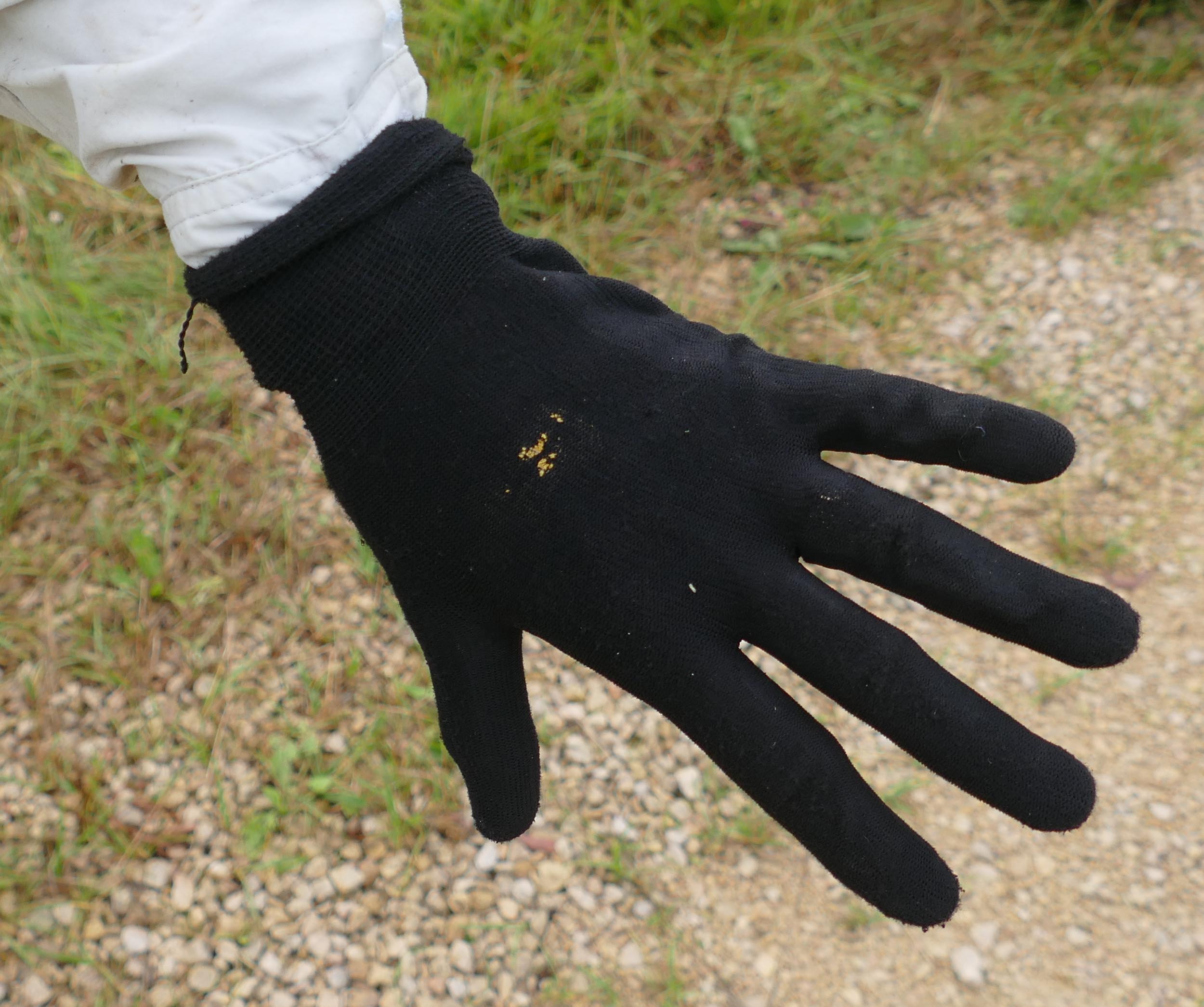
I used to have trouble protecting my wrists – I’ve gotten several blisters where my shirt cuffs and gloves didn’t quite meet. Now I sew pieces of velcro to the cuffs of my shirt, and the glove fabric sticks to it, closing that gap.
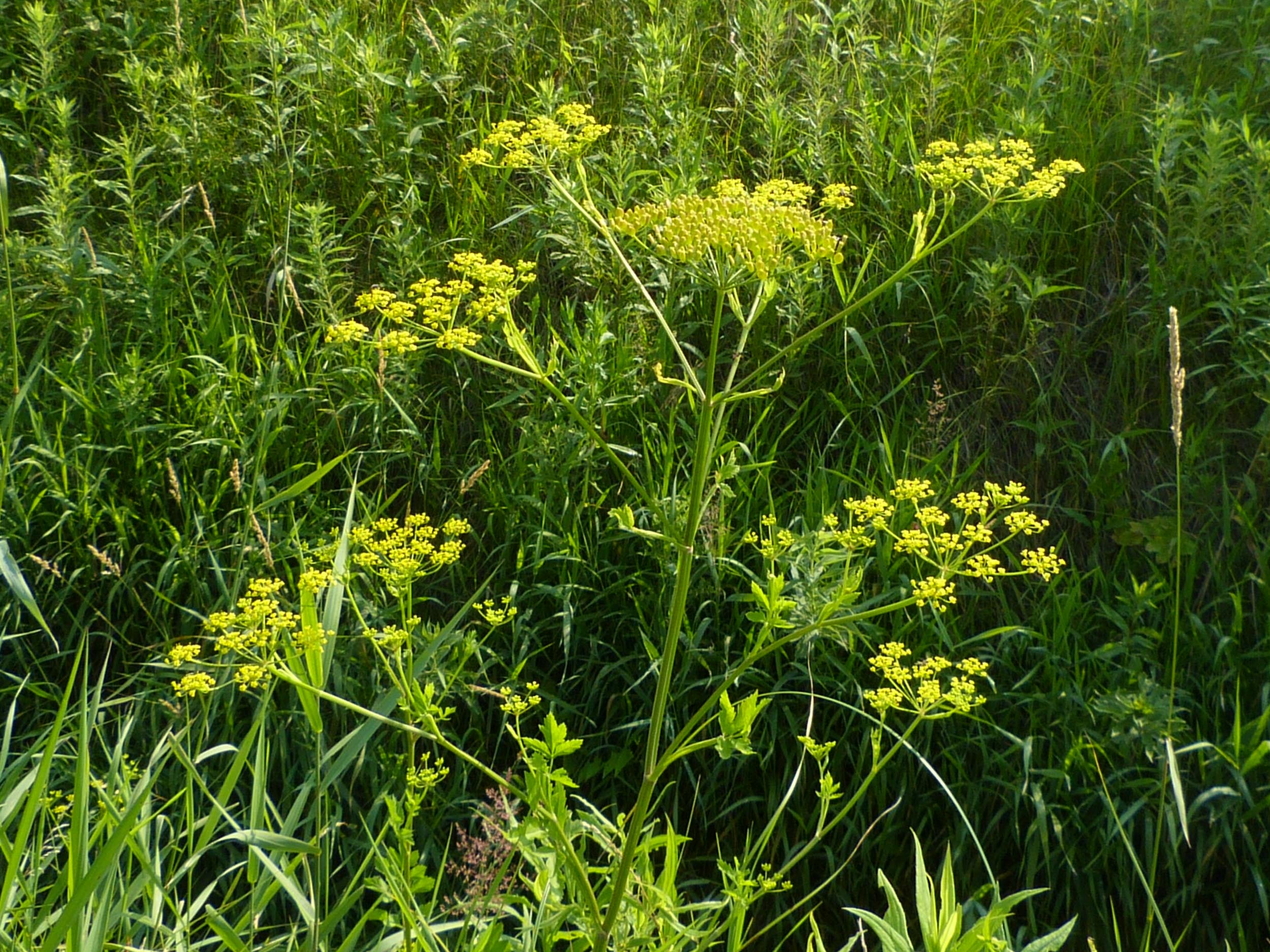
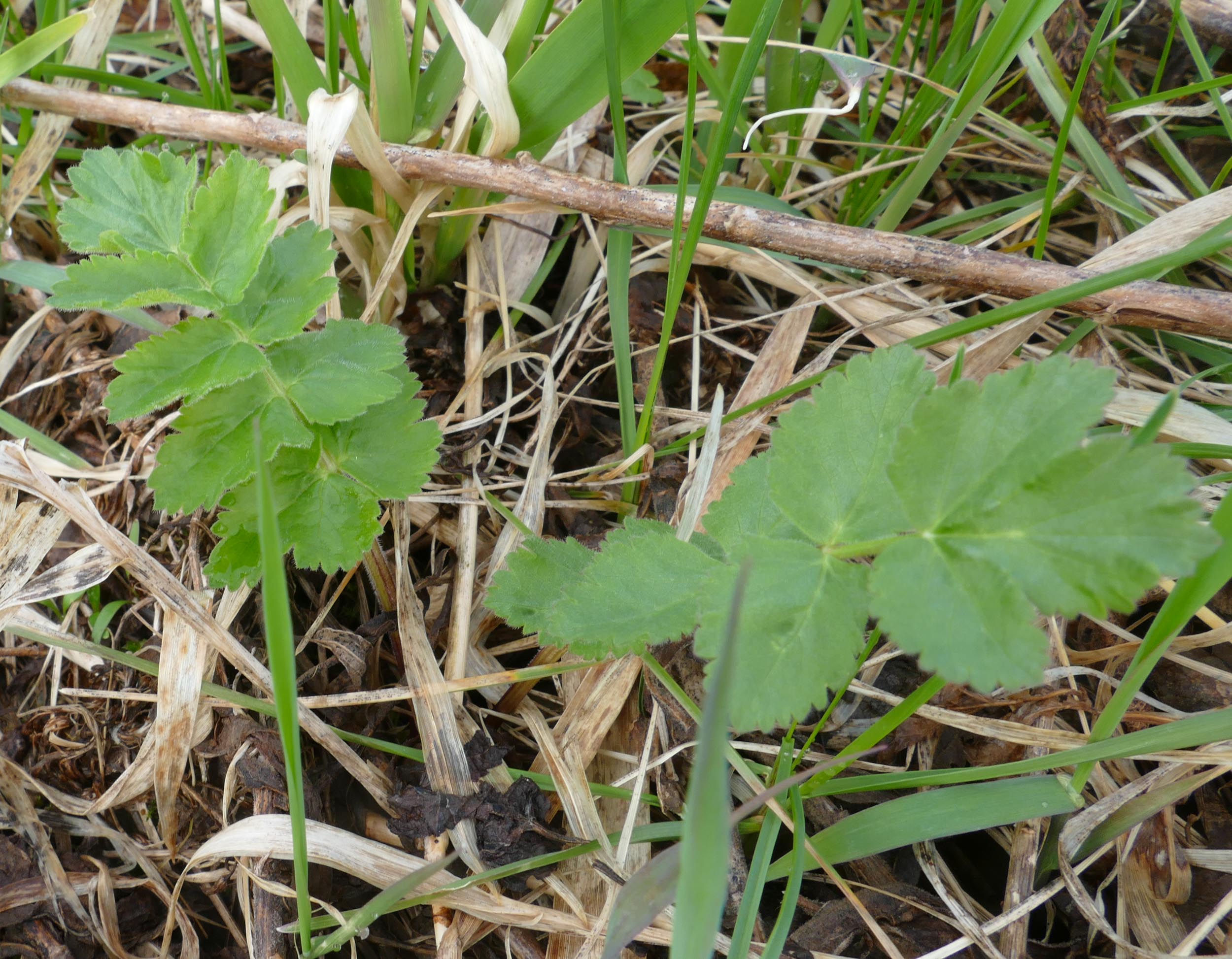
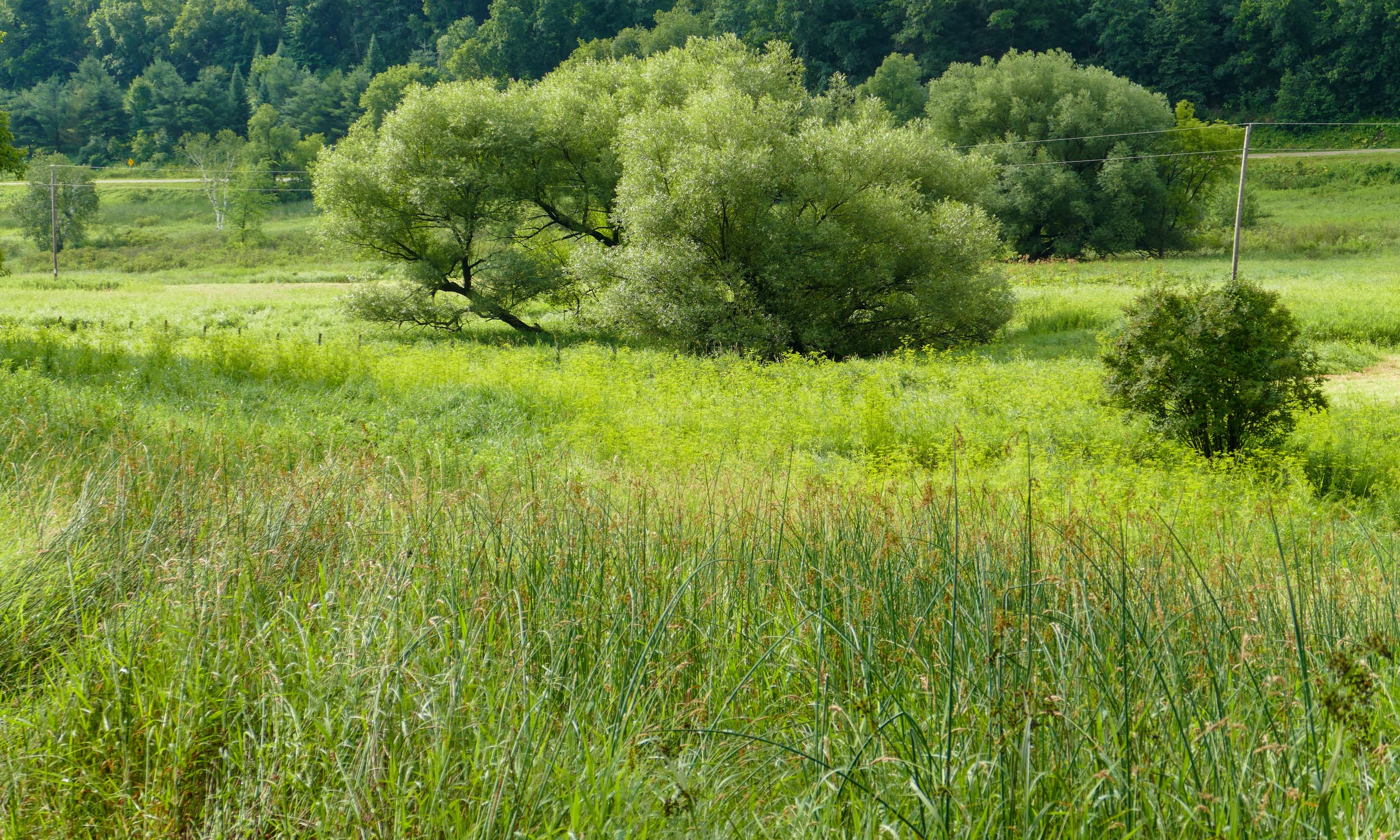
Wild Parsnip is a biennial, producing a rosette of leaves the first year, and a single flower stalk the second year. It grows in open areas and wetlands – not in standing water – but in areas with plenty of moisture.
Wild Parsnip – second year plant
Wild Parsnip – first year plant
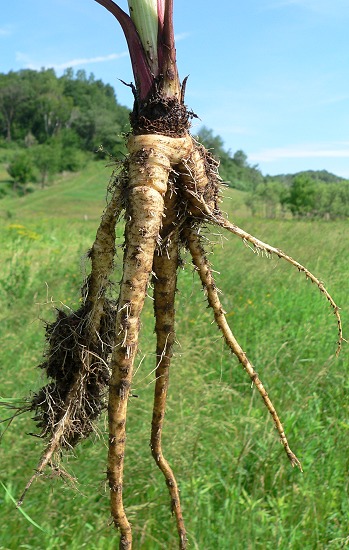
Wild Parsnip root
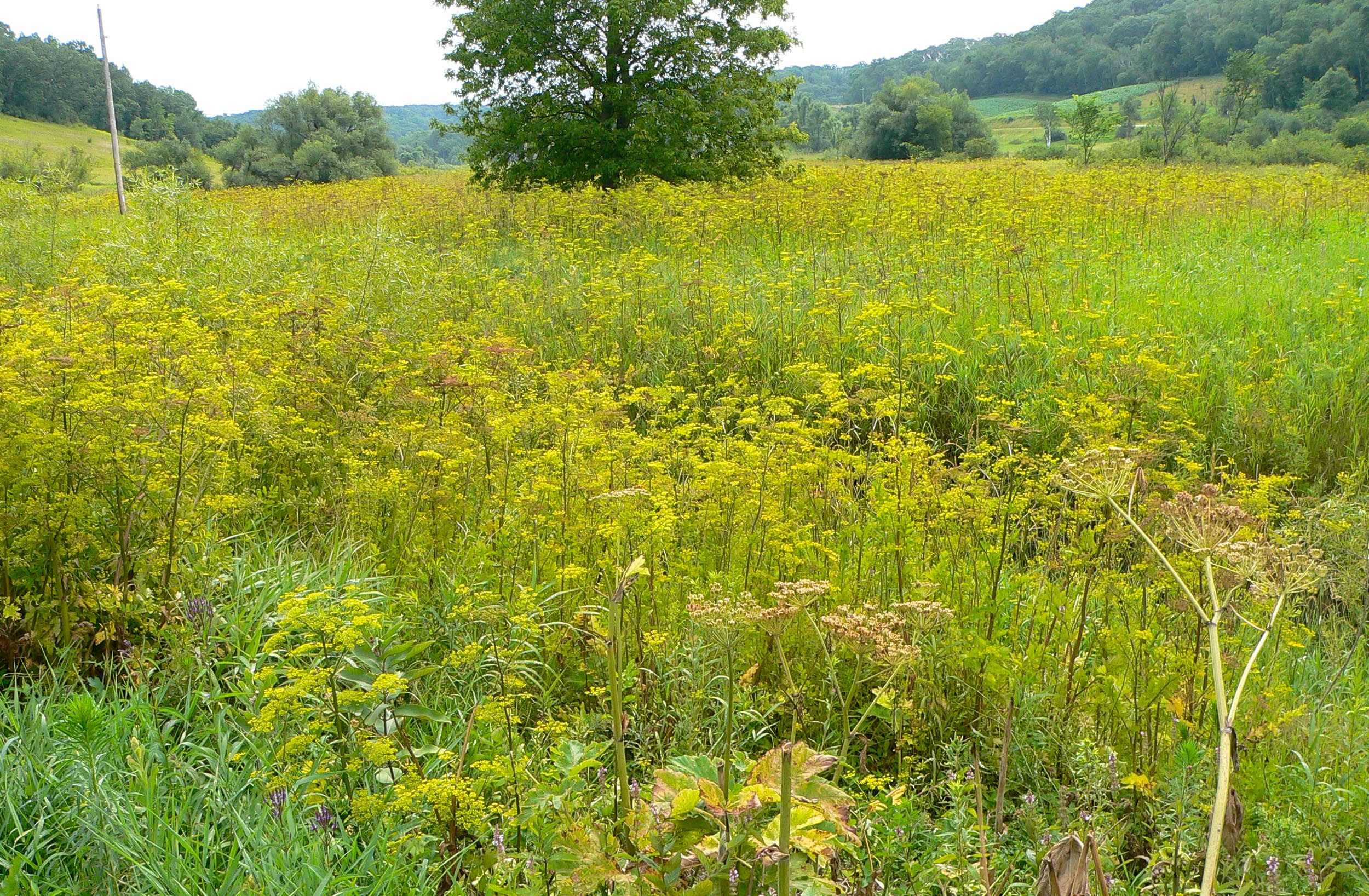
A wetland that’s been invaded by Wild Parsnip

More Wild Parsnip
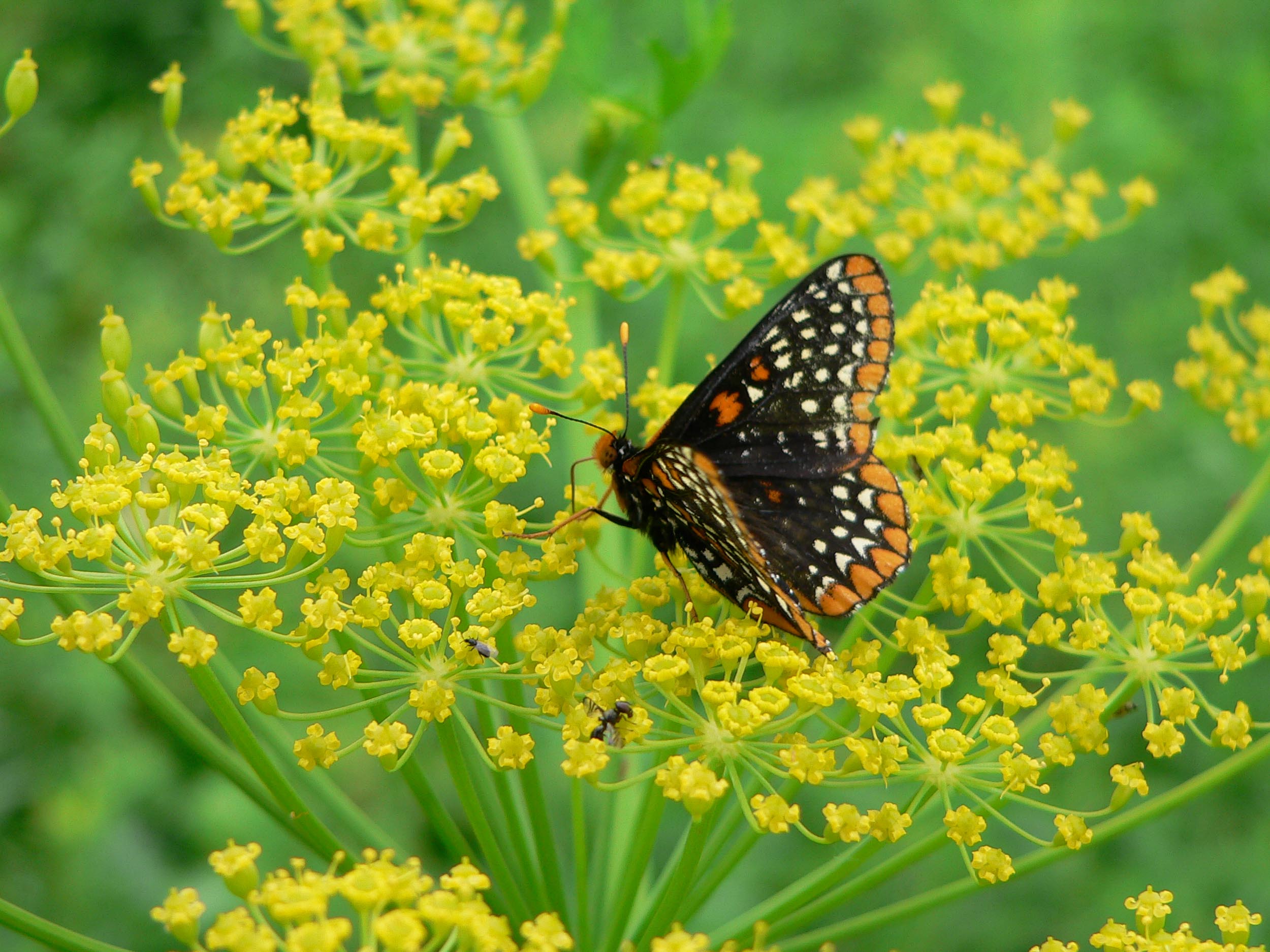
Native insects nectar at the flowers – like this Baltimore Checkerspot butterfly.
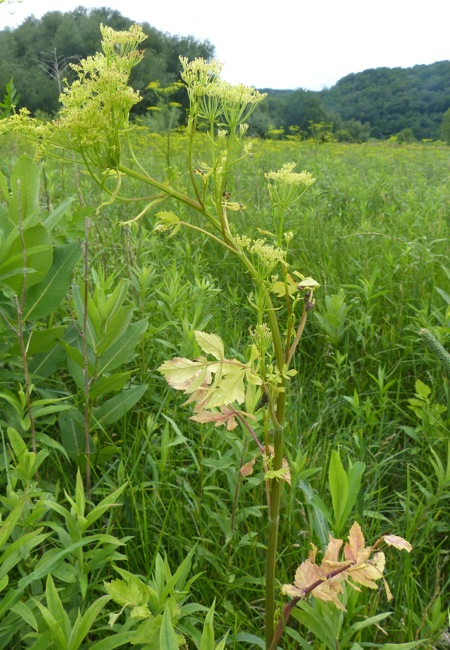
There are a few things that attack Wild Parsnip, but they don’t seem to make much of a dent in the population. This is a Black Swallowtail caterpillar. Black Swallowtails will eat Wild Parsnip, but I don’t find them on plants very often.

This is a disease called Aster Yellows. It’s transmitted by hoppers which don’t overwinter here – they fly up from the south in the spring. So in years when there are lots of those hoppers, there are more diseased Parsnip plants – but not enough.
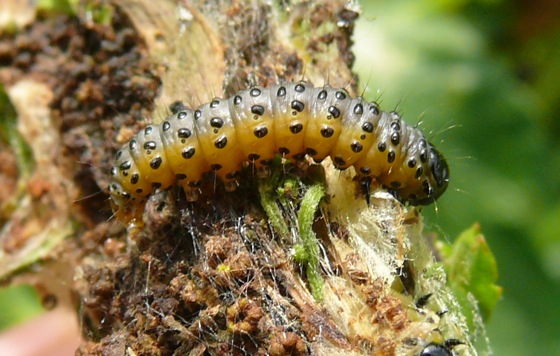
Parsnip Webworms (Depressaria radiella) came here from Europe, probably sometime in the 1800s. They’re the caterpillars of small moths that eat Wild Parsnip and several related plants, but don’t seem to have enough impact to really affect its spread.
Here’s the caterpillar of the Parsnip webworm.
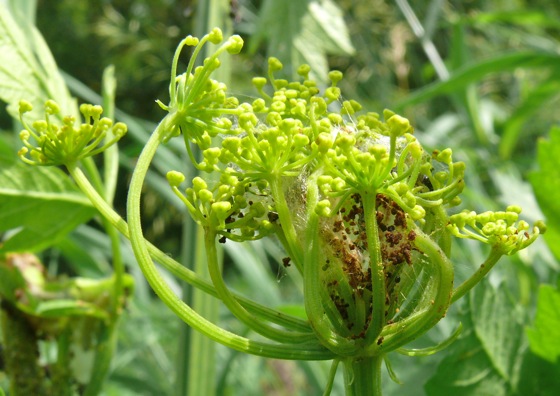
Here it is inside it’s ‘nest’ on a parsnip plant.
And here’s an adult Parsnip Webworm moth.

I see the webworms here, but not in great numbers, and they don’t seem to be having an effect on the Parsnip population.
We have about 50 acres of wetland, and there’s parsnip in nearly all of it. We started trying to eliminate it on our western border, and we’re slowly working our way east. I think we’ll always have some parsnip, but I’d love to get it to the point where we only have to spend a few days on control every year.
We’ve discovered two methods of control that seem to work well.
Where there are dense patches of second year plants, Mike mows it just when the plants are beginning to come into bloom. The mowed stems do send out new flower stalks, but they’ve very short, and don’t produce nearly as many seeds as the unmowed stalks. He mows dense areas for two or three or four years – usually just once a year. (It’s important to mow with something that doesn’t spray plant bits up into the air and onto the person who’s mowing.)
This field is being mowed for parsnip.

After mowing for a few years, and the density of second year plants is lower, I pull the ones that are left by hand before they go to seed. (I prefer pulling by hand rather than mowing because it allows the other wetland flowers to bloom.)
The roots are large and often branched, so it’s sometimes difficult to pull them. They come out more easily if the ground is wet or soft.

If they’re hard to pull, there are two things I can do to make it easier.
One is to use a special shovel to cut the root below the surface. The Parsnip Predator is designed to remove Parsnip, and other tap rooted plants. I push the blade down near the root at an angle so it cuts the root about an inch below the surface.
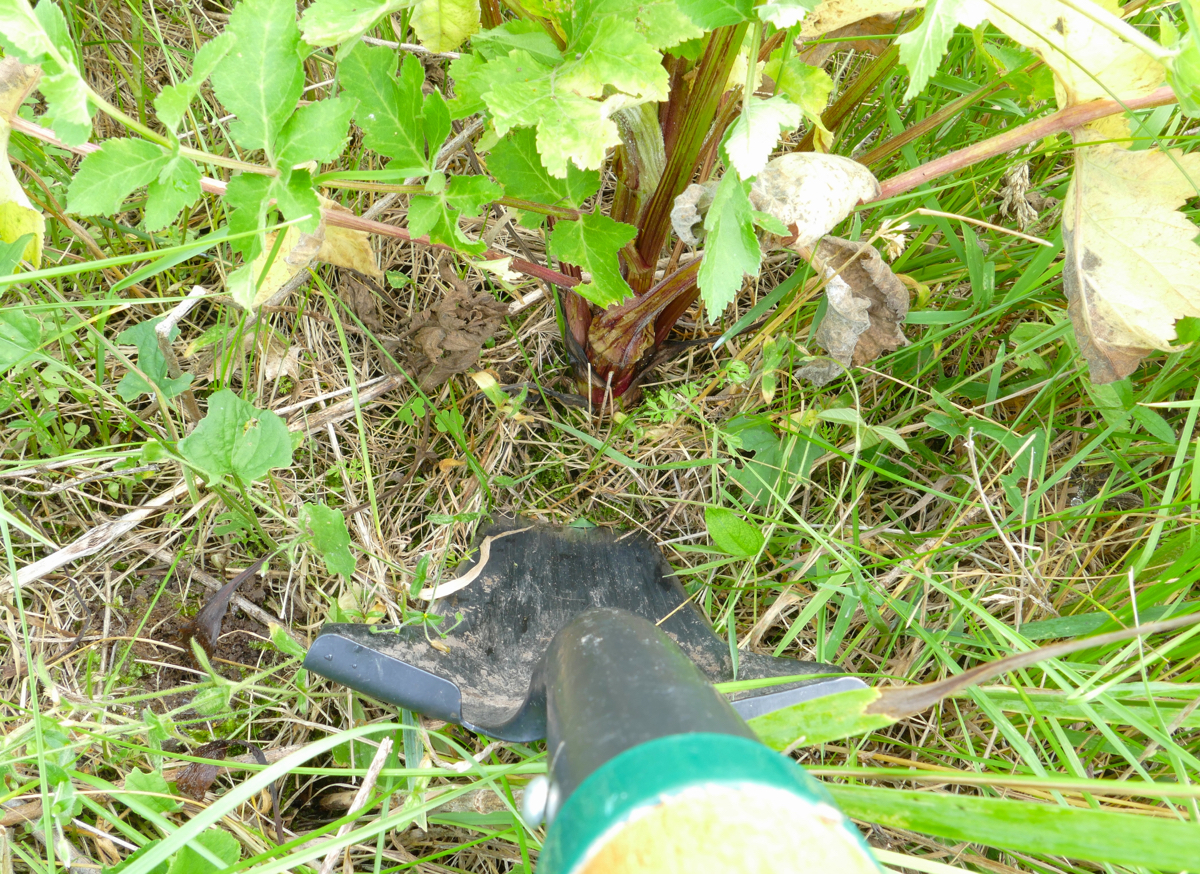
Then I can easily pull out the top of the plant. Here’s the top of the plant with the cut root. Once it’s been cut, the root that’s still in the ground dies.

The other possibility is to cut off the stalk close to the ground, and treat the cut stump with herbicide. I do this along our gravel driveway or along the roadside, where the plants are difficult to pull and the shovel doesn’t work. I use 5-10% glyphosate.
I usually start pulling in early June, and finish in mid-late July. Over the season I use 3 pulling techniques, depending on the Parsnips’ stage of development.
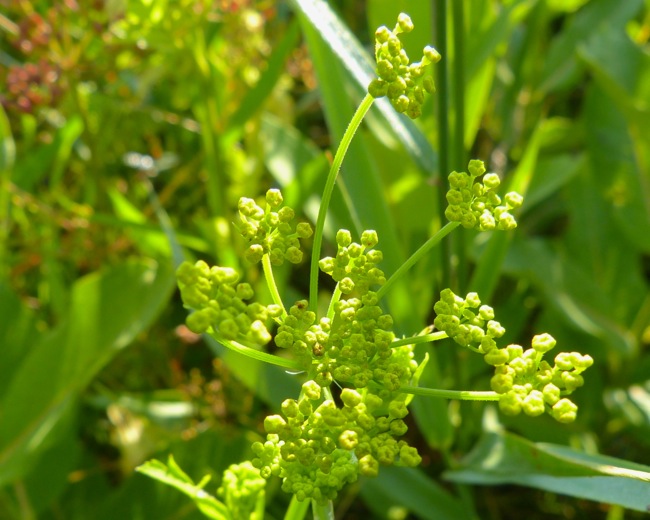
1 – Here’s a small second year plant, with the flowers not yet expanded. Early in the season, most of the plants look like this. Once they’re pulled, the flowers won’t continue to open, and no seeds will form. This makes pulling them much easier – I don’t have to remove the pulled plants from the site. I just let them drop to the ground as I pull.
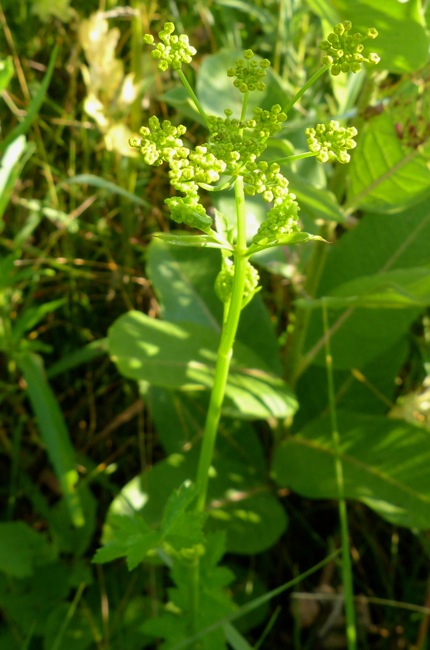
Closeup of the unopened flower
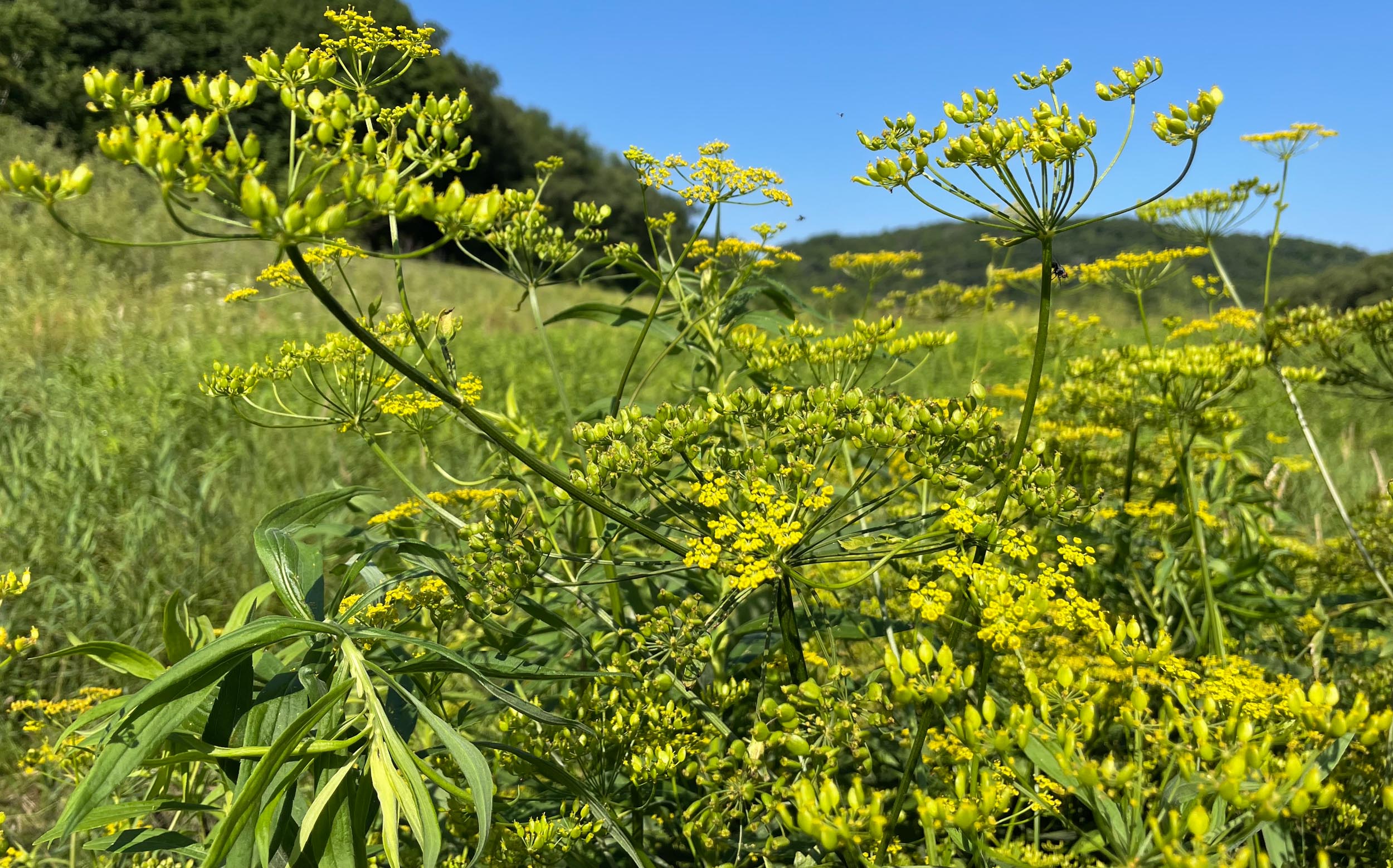
2 – As soon as the flower heads start to make seeds I have to remove the plants from the site, or at least remove the seeds.
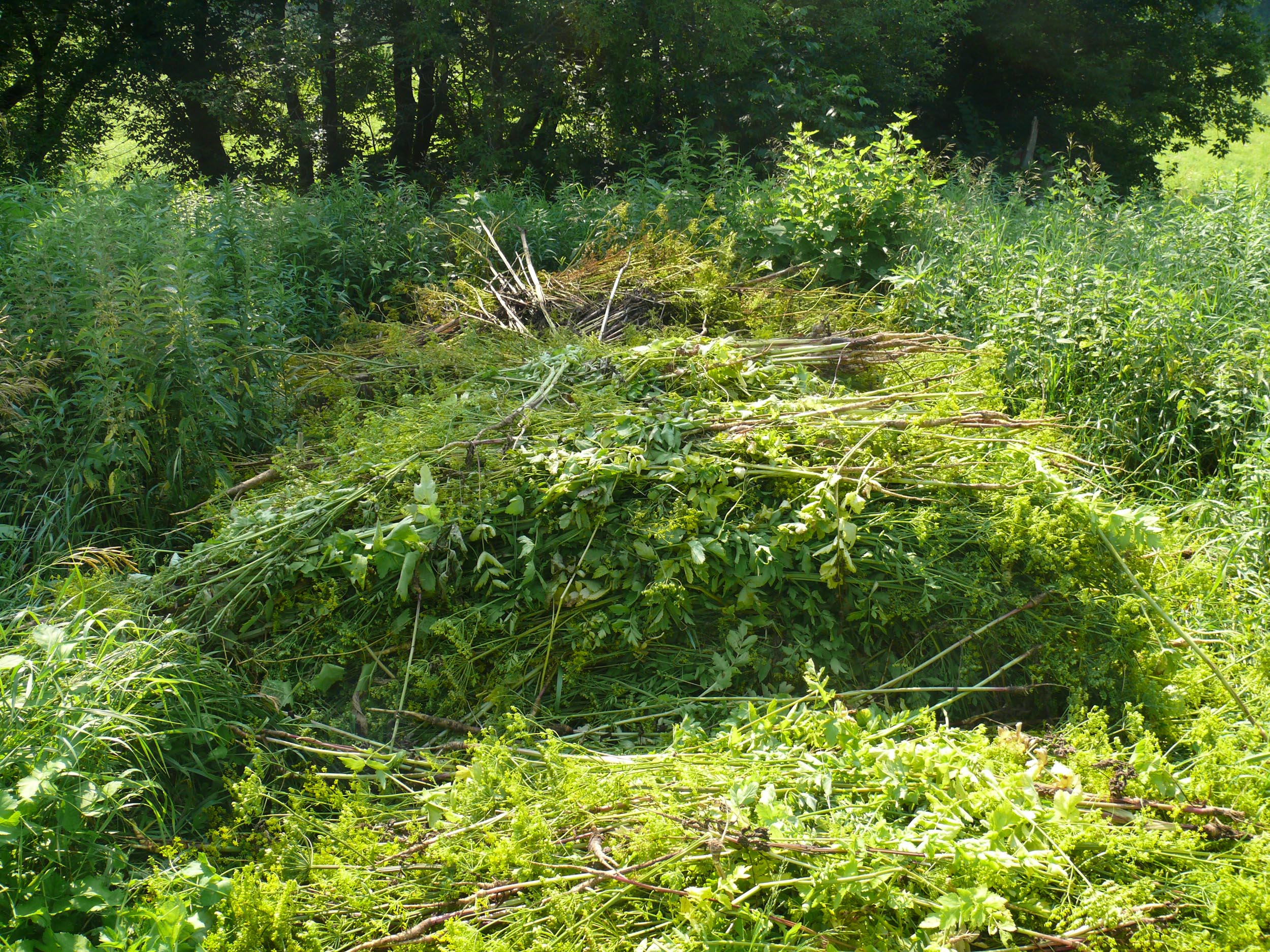
At this point in the summer, I used to pull the plants, make piles of them, and carry them back to the compost pile. Here’s the EV full of pulled Parsnip plants, ready to go on the compost pile.

The compost pile with parsnip – this was a year when I had a lot to pull. Some of the seeds germinate in or around the pile. I check around it the following year to be sure I pull or dig up all the seedlings.
Recently I’ve discovered that it’s much easier to cut off the seeds, and put them into a bag that I carry over my shoulder. When the bag is full, I dump them in the back of the EV, and then eventually on the compost pile.
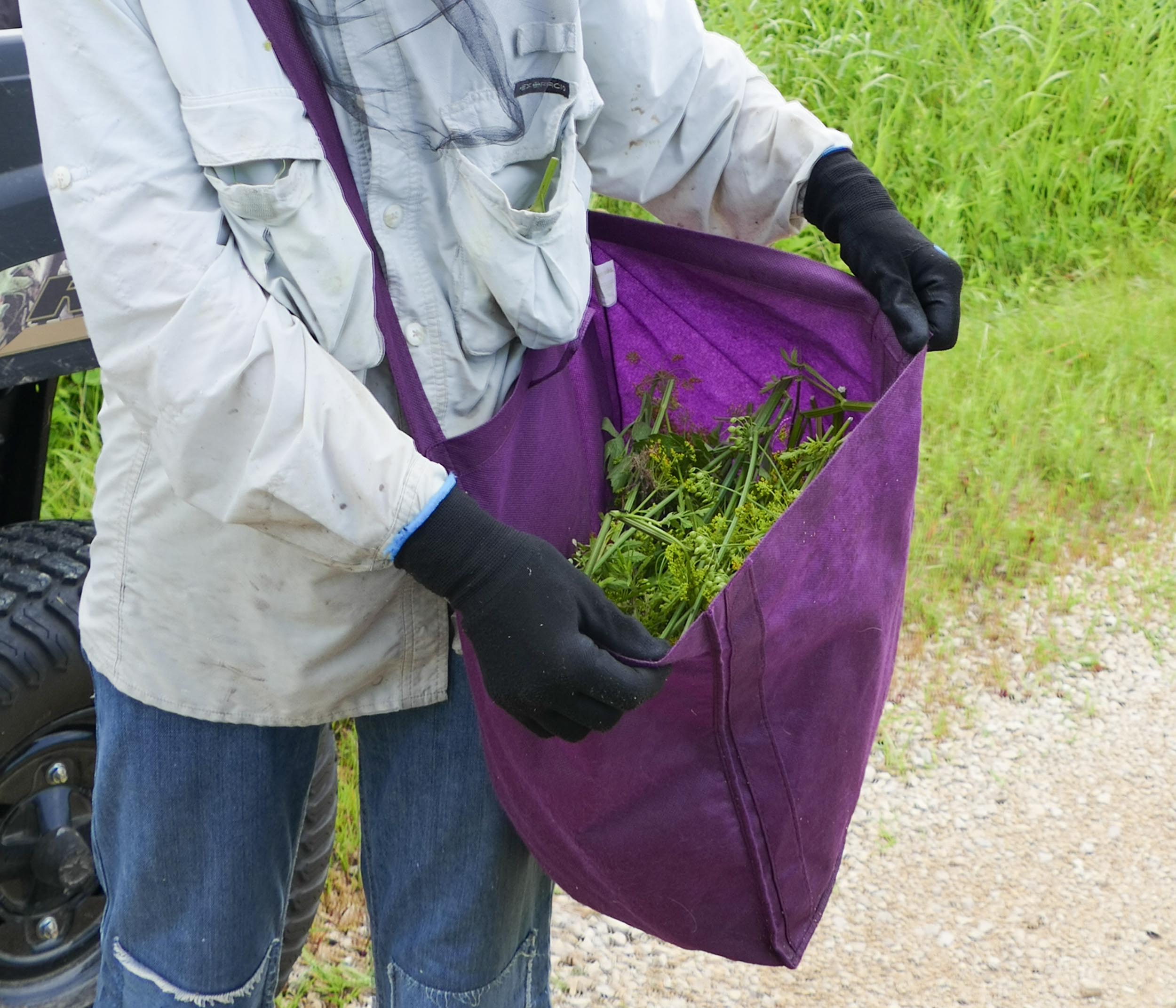
Once the seeds are cut off the plant, I pull it and leave it on the ground. Carrying out my bag of cut seeds is much less work than carrying out piles of whole plants.
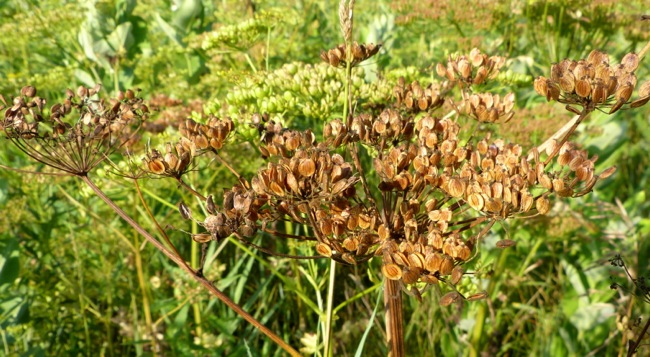
3 – Late in the season, when the seeds are beginning to mature, and the leaves are yellowing, I stop pulling the plants, and just cut off and remove the tops. At this point the remainder of the plant won’t re-sprout. This stage doesn’t last long – as soon as the plants start to yellow, the seeds start to mature and dry and drop off. I have to hurry and get finished before the seeds start dropping off the plants.
When the seeds look like this, the plant is starting to dry up, and I can leave the root in the ground, and just cut off the top.
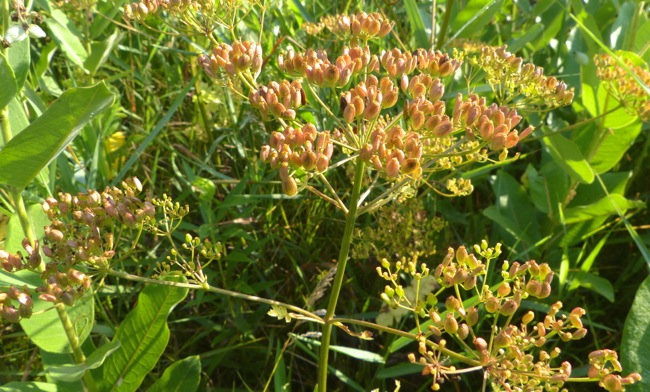
This picture shows some very dry seeds – they’re starting to fall off the plant. It’s still worth cutting and removing as many as I can – it prevents a lot of new plants from getting started. But I’m almost at the end of the parsnip control season for the year.
For years I didn’t see much progress – it seemed like every year there were as many plants as there had been the year before. But finally I’m really seeing a difference. In 2019, most of the places I’ve been working on for years had very few parsnip plants. Hopefully we’ll soon be parsnip-free!
This photo is from July 2007.
The same place at the end of June 2019.